Skip to content

CFP: ‘The Heirs of Annie Ernaux’ (Volume #3 Annie Ernaux International Studies)

CFP: ‘The Heirs of Annie Ernaux’ (Volume #3 Annie Ernaux International Studies) published on

The Heirs of Annie Ernaux 

Volume #3 Annie Ernaux International Studies (De Gruyter Brill) 

Series editors: Michèle Bacholle and Jacqueline Dougherty

Volume editors: Beth Kearney and Alexandra Pugh

We are preparing an edited volume that will explore the multiple legacies of the 2022 Nobel Prize in Literature laureate, Annie Ernaux. In what ways do writers, visual artists, and filmmakers inherit from and reimagine Ernausian themes, approaches, poetics, and aesthetics?

We are seeking proposals for scholarly chapters as well as non-traditional, creative submissions. All proposals should make clear reference to the elements of Ernaux’s work that are being “inherited” and they should study either a single Ernausian “heir” or multiple “heirs” through a comparative lens. We are interested in chapters focusing on practitioners from across the world, and not only those from anglophone and francophone spheres, although the volume will be published in English. Contributors are encouraged to adopt a broad view of the notion of “inheritance,” which may apply to individuals of a succeeding generation (“vertical” genealogy) as well as those of the same generation (“horizontal” genealogy). Inheritance may, furthermore, be understood as a dialogue between generations for, as Françoise Collin writes (82), inheritance often occurs bilaterally – through relationality and exchange. All contributors should consider how the act of inheritance necessitates a degree of transformation or evolution, shaped by the spatial, temporal, cultural, social, and political differences that distinguish Ernaux from her heirs. In this sense, we envisage inheritance in the terms that Evelyne Ledoux-Beaugrand develops (25), namely as an opening to alterity, difference, and newness. Inheritance need not be understood as a deliberate act, since an heir may unintentionally borrow or rework Ernausian themes, tropes, and approaches. Ernaux’s work has enjoyed a global reception and impacted the ways readers across the globe think about art, society, politics, gender, the body and more; it is therefore inevitable that her contributions have both directly and indirectly influenced other practitioners. Furthermore, inheritance need not imply agreement with or praise of Ernaux’s work. What, for instance, does it mean to be the bearer of a troublesome, difficult, or unwanted inheritance? Is it possible to work against the process of inheritance? To again cite Collin, “filiation is the art of holding onto a thread and breaking a thread” (83). Similarly, Ledoux-Beaugrand (25) writes that “an inheriting posture” involves a “process of sorting” characterised by both continuity and rupture. Finally, we invite contributors to engage not only with “successful” or reparative forms of inheritance, but to explore “unsuccessful,” oppositional, and even superficial engagements with Ernaux’s legacy. The following thematic axes are four among many possible approaches to this topic, and they provide only a few potential starting points for responses to this call for proposals. Please let us know if your contribution fits within one of these themes, or whether you would like to propose another.

Betraying and Defending Origins 

“Ernaux has become a critical observer of socio-economic structures and an embodiment of the complexity of cultural capital,” write Élise Hugueny-Léger and Fabien Arribert-Narce. In her role as observer of class structures and sociocultural dynamics, Ernaux also examines her own positionality. Raised by working-class parents who made sacrifices to send their daughter to university, Ernaux at times frames her own social mobility as a “betrayal” of her origins. Yet through the political force of her writing, as well as her concrete interventions into France’s political sphere, Ernaux regularly acts in solidarity with a variety of working-class groups. This fidelity, rather than betrayal, was powerfully evoked in her Nobel Prize acceptance speech, when she spoke words that she had written in her diary over sixty years earlier: “I write to avenge my people.” This notion resonates in the work of multiple authors writing today. Perhaps the most well-known example is Édouard Louis, whose texts offer intimate portrayals of his parents and the multiple forms of violence that he observed and experienced throughout his working-class childhood. Yet the Ernausian trope of defecting from, betraying, or defending one’s origins extends well beyond the work of Louis. It is discernible, for instance, in narratives that portray a trajectory from the banlieues of France towards its urban “centres,” including Nesrine Slaoui’s Illégitimes (2021) [Illegitimates] and Fatima Daas’s La Petite dernière (2020) [The Last One (2021)]. The trope is also present in texts about immigration to France, such as Kaoutar Harchi’s Comme nous existons (2021) [As We Exist (2023)]. This aspect of Ernaux’s legacy is further observable in the ways that authors critically experiment with the French language while attempting to do “justice” to their origins, as Harchi argues in Je n’ai qu’une langue et ce n’est pas la mienne in relation to the work of Kateb Yacine, Assia Djebar, Rachid Boudjedra, Kamel Daoud, and Boualem Sansal. The language of popular and working-class cultures is also brought to life in the fiction of Virginie Despentes: as Martina Stemberger writes, Despentes incorporates a popular vernacular through slang, verlan, anglicisms, and hybridity.

Disclosing Bodily Experience 

Embodied experience has been a core focus of Ernaux’s writing since her first publication, the novel Les Armoires vides (1974) [Cleaned Out (1990)], which portrays the illegal abortion of its young protagonist. This focus on the body reappears in recent texts, such as Le Jeune homme (2022) [The Young Man (2023)], in which Ernaux describes a romance that she had with a student thirty years her junior. Across her career, then, a major focus for Ernaux has been the body, which she represents as a site of pleasure, violence, shame, illness, and class struggle and which bears the imprint of gendered, classist, and ageist hierarchies. The disclosure of bodily experience is an increasingly dominant trend in global literature, and Ernaux’s work in this space has been particularly influential. In part, this is because she interrogates embodied experience – that of women, in particular – in ways that resist convention. When Passion Simple (1992) [Simple Passion (2021)] was first published, even feminists disapproved of the work, perceiving a lack of female agency as the protagonist succumbed to her desire for a man. And yet, this text has served as inspiration for contemporary women authors such as Liliane Fishman who, in Acts of Service (2022), also explores submission and female desire. Ernaux’s transgressive approach1 to disclosing bodily experience often serves to highlight gender inequalities, most famously in L’Événement (2000) [Happening (2019)], which emphasises the dangers of criminalising abortion. This is also true of texts such as La Femme gelée (1981) [A Frozen Woman (1996)] and Les Années (2008) [The Years (2018)], in which Ernaux critically addresses the socio-culturally entrenched association between femininity, domesticity, motherhood, and wifedom. How do contemporary writers, visual artists, and filmmakers adopt and adapt these themes? How are embodied experiences narrated today, and does this extend, depart from, or reimagine Ernaux’s legacy?

Writing Life 

Critics and scholars have described Ernaux’s work as autobiographical, autoethnographic, and autofictional, yet Ernaux prefers the term “autosociobiography;” for her, this term reflects a sustained interest in the relationship between the self and wider socio-historical realities (Ernaux, L’Écriture comme un couteau 41 and Ernaux in Rérolle). How have Ernaux’s heirs negotiated the distinctions between, and hybridity of, these forms of writing? How might “autosociobiography” relate to Deborah Levy’s notion of “living autobiography,” for example – a form of life writing that is open, evolving, and unresolved?2 Ernaux resists the popular term autofiction, sensing that it is applied misogynistically to denote a supposedly lesser “feminine genre, with a narcissistic, trashy, sentimental side to it” (Ernaux in Rérolle). To what extent do Ernaux’s heirs embrace, reject, or problematise other categories and genres in their approach to writing life? Ernaux consistently emphasises the truth value of her work. Both within her narratives and in media interviews, she stresses her work’s proximity to life. Her texts frequently make use of personal diary entries, and she writes in Happening of her desire to use the autobiographical text to “physically bond” with images from her past (19). Ernaux also experiments with the diary form, notably in her “journaux extimes” (“extimate” diaries or diaries of/from the outside),3 an approach that Lauren Elkin appears to inherit in her “diary of a year on the bus” titled No. 91/92. Moreover, in writing life, Ernaux uses language that is functional, spare, and unadorned – a style she refers to as “flat writing” (Ernaux, La Place 24). The heirs of Ernaux’s “flat” prose might include Constance Debré and Colombe Schneck, whose life writing tends towards frankness and concision. Yet the simplicity of Ernaux’s prose is deceptive, since she simultaneously broaches powerful societal taboos – from abortion to ageing, illness, and female desire. Could writers like Rachel Cusk, Chris Kraus, or Goliarda Sapienza be understood to inherit Ernaux’s interest in the transgressive expression of intimate experience? And to what extent do these authors go beyond the self in their writing, to express a more “transpersonal” truth?

Crossing Media 

Ernaux’s corpus encompasses multiple media: while she is known principally for her writing, she has co-produced a film, Les Années Super 8 (2022) [The Super 8 Years] and multiple works of “photobiography,” including the co-authored L’Usage de la photo (2005) [The Use of Photography (2024)] and a newly illustrated, collaborative edition of L’Autre fille (2023) [The Other Girl (2025)]. In works such as The Years, Ernaux also describes photographs in prose, rather than reproducing them as images. This interest in text-image hybridity can be traced in the work of many other contemporary practitioners, such as W.G. Sebald, Sophie Calle, Roland Barthes, and Hervé Guibert.4 Although Louis is often understood as an “heir” of Ernaux for his intimate narratives of class mobility and social violence, his practice of using photographic images and collaborating on stage adaptations of his own works may likewise be understood as an Ernausian inheritance. In the exhibition “Exteriors: Annie Ernaux and Photography” (2024), curator Lou Stoppard juxtaposed “snapshots” of Ernaux’s writing with photographs of everyday life by Martine Franck, Daido Moriyama, William Klein, and many others. This exhibition invites us to appreciate the photographic quality of Ernaux’s writing, and to consider visual artists as her “heirs.” In 2024-25 in London, a stage adaptation of The Years made headlines when an abortion scene caused many theatregoers to faint. This raises questions about the impact of re-presenting subject matter across different media, though we invite contributors to attend to the distinction between adaptation and inheritance.

Submissions 

Please send proposals via this online form by Monday 30 November 2026https://forms.office.com/r/ep4MvEXmEb. You may direct questions to the volume editors, Beth Kearney (b.kearney@uq.edu.au) and Alexandra Pugh (alexandra.pugh@queens.ox.ac.uk). All contributions will be in English, and English translations of all foreign language material should be provided. The exception here is creative contributions, which may be multilingual depending on the aims, scope, and ambition of the piece. Chapters are expected to be 5,000-6,500 words in length.

Project Timeline
• Submissions due: Monday 30 November 2026
• Notification of the editors’ decisions on chapters: January 2027
• Full chapters due: May 2027
• Peer review: May-November 2027
• Publication: 2028

[Source: Beth Kearney and Alexandra Pugh]


Annie Ernaux & Judith Godrèche in Cannes for ‘A Girl’s Story’

Annie Ernaux & Judith Godrèche in Cannes for ‘A Girl’s Story’ published on

Annie Ernaux was in Cannes at the weekend for the première of the film adaptation of Mémoire de fille/ A Girl’s Story by Judith Godrèche, who is known for her involvement in the French #metoo movement. The film is due to come out in cinemas in September. [Source: festival de Cannes]

Creation of the new book series ‘Annie Ernaux International Studies’

Creation of the new book series ‘Annie Ernaux International Studies’ published on

Brill is pleased to announce the creation of the first book series devoted to the study of the works of Annie Ernaux: Annie Ernaux International Studies. Edited by Michèle Bacholle & Jacqueline Dougherty, the series provides a home for Ernaux Studies to fully develop in a structured and sustainable fashion within a community of international scholars. The series will include themed volumes, monographs, and other resources that will facilitate and inspire further research on Annie Ernaux’s oeuvre. More information available here.

Annie Ernaux speaks out on Gaza, 4th June, 2025

Annie Ernaux speaks out on Gaza, 4th June, 2025 published on

Annie Ernaux was invited by the French TV literature discussion programme La Grande Librairie in June 2025. She took the opportunity to speak out about Gaza. This is what she said:

For months, every day I have watched images from Gaza, filmed by reporters risking their lives, images of schools and hospitals destroyed, children dead or mutilated, a whole population trying to flee the bombs, in vain. And all the time a feeling was growing inside me that something must be done, and that I am not doing it, and this feeling renders the act of writing derisory, even cowardly. I was writing as if I hadn’t seen these terrifying images, hadn’t read that the sole obsession of the inhabitants of Gaza is the struggle to avoid being blown to pieces, because for them reality now is no longer life but death.

I was not alone with this feeling. Last week, we, hundreds of French language writers united to do something, to speak out, to denounce the genocide taking place in Gaza, transmitted to us, the proof before our eyes: the blocking of aid to create widespread famine, the forced movement of families like cattle, the massacre of a population whose only crime is that of being born there.

The annihilation of Palestinian civilisation is taking place through the destruction of its monuments, its ancestral traces, the exile or death of its writers, artists and film-makers. In its place, a riviera, and tourists.

The silence is being broken. Refusing to be intimidated by the most abject accusations, people are raising their voices. I wish them strength and the determination to demand a permanent ceasefire, the return of the Israeli hostages and the liberation of the thousands of Palestinian prisoners in the West Bank, bringing pressure to bear on the French government and international bodies. This necessary precursor has to be accompanied by an end to the repression of the Palestine solidarity movement, the naming and interrogation of the racist imaginary in relation to Arab peoples which is at the heart of the acceptance of the martyrdom of the people of Gaza. Our humanity is at stake. As the young writer from Gaza Nour ElAssy recently wrote:

“If human rights, and morality have any sense, Gaza is the place where these values must survive or die, for if the world can watch us disappear without doing anything, nothing that it claims to defend is real”.


Translated by Lyn Thomas


Call for papers: Older Age: Annie Ernaux and the Life Course

Call for papers: Older Age: Annie Ernaux and the Life Course published on
In 2023, novelist Rachel Cusk argued that the French writer Annie Ernaux had “broken every taboo of what women are allowed to write.” Throughout her fifty-year-long career, Ernaux has used innovative formal techniques to write about deeply personal—and often shameful—experiences. In her fearless, “flat” style she has described having an illegal abortion (Happening); embarking on an affair while being treated for breast cancer (The Use of Photography); and the pain of putting her mother in a care home (I Remain in Darkness). She has also written extensively about aging and older age, raising provocative questions about how we care for others, how we understand collective memory, how the culture around us introduces us to ageist thinking, and how different generations interact with each other.

This special issue of Age, Culture, Humanities focuses on what Ernaux’s various texts can teach us about aging and the life course. We welcome cross-disciplinary papers focused on individual works or that situate her oeuvre within wider socio-cultural conversations about aging. Authors may wish to consider the intersection of age, gender, and social class or perhaps put the recent Nobel laureate’s works in dialog with those of another writer. We also encourage authors to consider Ernaux’s late-life political activism, including how #MeToo inspired A Girl’s Story and her involvement in the French anti-ageist organization called the CNaV.

Possible topics – which need to engage with the topic of age and aging from a humanities perspective –  include:

  • Narrating care and dependency
  • Intergenerational relationships
  • Sexuality and desire across the life course
  • Class mobility and its effects on the experience of aging
  • The experience of rereading texts as one ages
  • Anglophone and francophone representations of aging
  • Success and fame in later life

Alongside conventional research articles (~8,000 words), we seek to publish shorter pedagogical papers that demonstrate how Ernaux’s books, essays, film, and photographic projects might be used to discuss aging in teaching (3,000 words). We would also be delighted to publish interviews related to Ernaux’s work. All articles will be peer-reviewed.

Please submit an abstract of approximately 300 words to sm4680@princeton.edu and anna.goulding@northumbria.ac.uk with a short biographical note by September 1st, 2025. Abstracts from scholars at all stages of their careers and working in any discipline are welcome. We will communicate publication decisions by September 19th, 2025.

Deadline for abstracts: September 1, 2025
Deadline for papers: December 1, 2025

Age, Culture, Humanities publishes articles on a rolling basis, so as soon as articles are ready, they will be published.

[Source: Sophia Millman on Francofil]

Call for articles for a bilingual volume on Annie Ernaux

Call for articles for a bilingual volume on Annie Ernaux published on
Call for articles in the bilingual (English-French) volume of Chiasma (Brill)
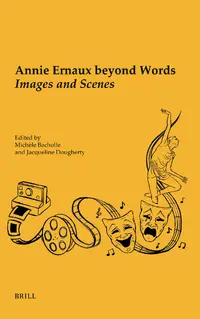
Annie Ernaux Beyond Words: Images and Scenes
Michèle Bacholle, Eastern Connecticut State University, USA
Jacqueline Dougherty, University of Pennsylvania, USA
Since the publication of Les Armoires vides in 1974, Annie Ernaux has consistently and fearlessly tested the boundaries of traditional literary paradigms in both form and content. With La Place (1983), not only did she abandon the novel and adopt her signature “écriture plate” (24), preferring it to a highly stylized mode of expression, she also implemented for the first time the evocation of photographs, a series of “prose pictures” for which she provided the ekphrasis. In Une femme (1986), she expressed the wish to remain “au-dessous de la littérature” (23) and proceeded to produce writing that most academics have agreed to refer to as “auto-socio-biographical” in nature. Since then, photographs (and films) have increasingly appeared in her work, sometimes spurring the narration (such as the visual photographs in L’Usage de la photo and the prose photographs and films in Les Années).
Beside this “phototextual” development in her work, we must also note her deployment of a photographic and cinematic lexicon and techniques as perhaps the most persistent subversion of convention. As early as her first three works, the author implements flashbacks and the use of textual scissions that produce an effect mimicking cinematic fades. Long before the oft-cited incipit of Les Années, “Toutes les images disparaîtront” (11), La Femme gelée (1981) had already revealed the terms images, scène, cinéma and film as surrogates for souvenir and mémoire. Memory—specifically, how Ernaux uses, exposes, interrogates, and records it—is one of the reasons why the Nobel Prize in Literature Committee decided to give her the highest award a writer can receive, i.e., “for the courage and clinical acuity with which she uncovers the roots, estrangements and collective restraints of personal memory.”
Even before Ernaux became the first and only French woman to receive the Nobel Prize in Literature, she had already begun to amass ever-increasing worldwide visibility and readers in academic circles and the general public alike. Her work had started inspiring visual and performance artists—let us mention Blanche Şerban’s The Abortionist’s Studio, the rendition of Ernaux’s ekphrasis of a non-existent abortion painting in L’Événement—, leading to stage readings (Marianne Balser’s L’Événement at the Théâtre de l’Atelier, 2024), theatrical adaptations (L’Occupation at the Théâtre Princesse Grace in 2019, Les Années at the Théâtre de la maison du peuple in 2020, De Jaren at the Het Nationale Theater in 2022, Happening at the Berliner Ensemble, Mémoire de fille at the Comédie Française in 2023, The Years at the Almeida Theatre in 2024) and filmic adaptations (L’Occupation as L’Autre by Pierre Trividic in 2008, Passion simple by Danielle Arbid in 2020 and L’Événement by Audrey Diwan in 2021). We also wish to emphasize additional proof of the inspiring nature of Ernaux’s work, as well as its transpersonal and transcultural reach by calling to mind two recent, but quite different endeavors: Nadège Fagoo’s 2023 publication of L’Autre fille, a book where Ernaux’s original text is illustrated, supported, yet also disrupted by Fagoo’s photographs, and the January-May 2024 exhibit, “Extérieurs—Annie Ernaux et la photographie” at the Paris Maison Européenne de la Photographie, where commissioner Lou Stoppard used photographs from the MEP collection to “converse” with Ernaux’s Journal du dehors (translated as Exteriors in English, hence the exhibit’s title).
This edited book welcomes articles on these two (and similar) ventures but also aims to expand the field of “phototextuality” and delve into other productions of images, especially film and theater, including documentaries like Michelle Porte’s 2013 Les Mots comme des pierres and Annie Ernaux and David Ernaux-Briot’s 2022 Les Années super 8, a mother-son co-production. How and to what end have film and stage directors transformed Ernaux’s texts into images? What are the stakes of ekphrastic intermediality in Ernaux’s works? We invite innovative contributions examining, in France but also elsewhere, the rendition of Ernaux’s texts into images and scenes and interrogating how/why she inspires others. Contributions from non-academics (for example dramaturgs, script writers, set designers, costume and fashion designers, etc.) and from outside France are most welcome. Articles in English or French.
Potential areas of inquiry include, but are not limited to the following:
Cinematic adaptations (L’Autre/L’OccupationPassion simpleL’Événement)
Theatrical adaptations of Annie Ernaux’s works
The documentaries, Les Mots comme des pierres and Les Années super 8
Co-creations
Images of alterity
Intermediality, ekphrasis
Intertextuality, intersemiotics
Literary and “photo-literary” transgression/subversion
“Photographic” memory, material and immaterial memory
Spatial representations (urban, rural, private, public)
The body (in words vs images/scenes)
Language:
Articles will be in English or French. Quotes from other languages will be translated in either.
Abstracts:
Please submit 250-300-word abstracts and a short bio-bibliography to Michèle Bacholle (bachollem@easternct.edu) and Jacqueline Dougherty (jdough@sas.upenn.edu). Abstracts should be written in French or in English and are due by August 31, 2024. Articles should not exceed 6,000 words in length, including notes and works cited.
Proposed Publication Schedule:
August 31, 2024: Submit 250-300-word abstract and a short bio-bibliography to both editors
September 15, 2024: Decision from editors
December 31, 2024: Submit completed article
March 31, 2025 (tentative date): Feedback and revision requests from Chiasma editors
August 31, 2025: Projected publication date

Exhibition ‘Exteriors: Annie Ernaux and Photography’ in Paris

Exhibition ‘Exteriors: Annie Ernaux and Photography’ in Paris published on
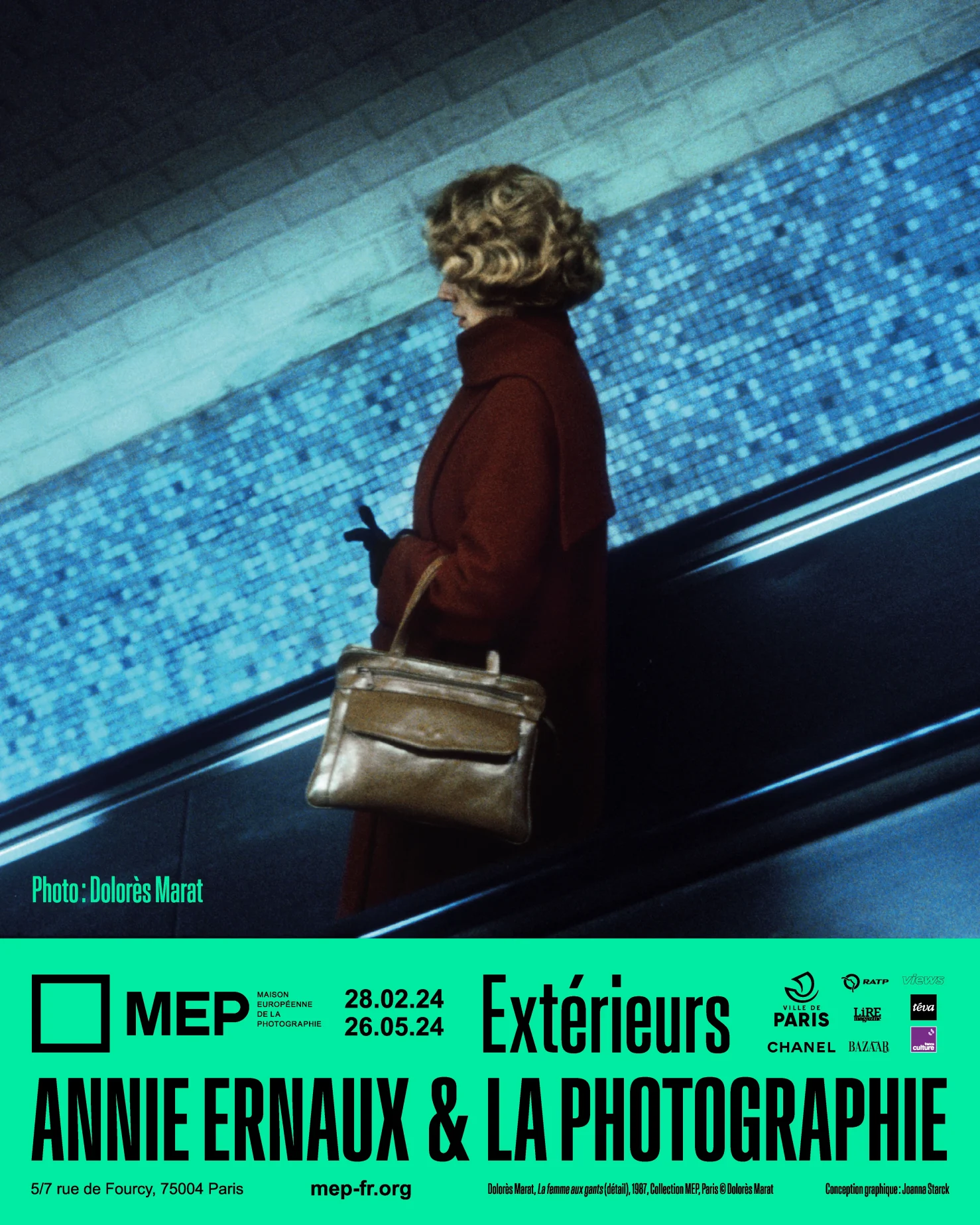
Exhibition poster, photograph by Dolores Marat.

The exhibition ‘Exteriors: Annie Ernaux and photography’ is opening at the Maison Européenne de la Photographie in Paris. Curated by Lou Stoppard, this exhibition celebrates the close link between Ernaux’s writing and photography. It brings in dialogue extracts from Ernaux’s 1993 book Journal du dehors (Exteriors) with a selction of photographs from the MEP collection. (Source: https://www.mep-fr.org/event/exterieurs-annie-ernaux-et-la-photographie/

Series of events on Annie Ernaux in Oxford

Series of events on Annie Ernaux in Oxford published on

A series of events are organised in honour of contemporary French writer and Nobel laureate Annie Ernaux at Oxford next month:

8 June 2030, 4pm: Screening of The Super 8 Years, followed by a Q&A with director David Ernaux-Briot

9 June 2023: International Colloquium ‘Annie Ernaux: Writing, Politics’

Starting on 8 June 2023: Exhibition ‘Annie Ernaux, Nobel Laureate: Class, Gender, and Life-Writing’

9 June 2023, 7pm: Screening of Happening, by Audrey Diwan

Annie Ernaux, photograph by Duncan Fraser, 1997

Organisation: Eve Morisi (St Hugh’s College, Oxford) in collaboration with Elise Hugueny-Léger (University of St Andrews), Ann Jefferson (University of Oxford) and Lyn Thomas (University of Sussex). Admission to these events is free, but registration for the film screenings is required.

Source: Eve Morisi.

Photo credit: Duncan Fraser.